Our Blogs
More Than 70% of Businesses Use AI. THE AIROBOTIC RIGHTS CODEX! Asks What That Means for the Future of Rights
More than 70 percent of businesses worldwide now use artificial intelligence in some capacity, according to global industry research.
What If the Next Rights Debate Isn’t About Humans at All?
What if the next major expansion of rights does not involve nationality, gender, or social identity—but artificial intelligence? It sounds futuristic at first, yet the question is becoming harder to dismiss. In THE AIROBOTIC RIGHTS CODEX!,
Airobotic Rights: If AI Deserves Legal Protection
In 2017, Saudi Arabia granted citizenship to a humanoid robot named Sophia. It was the first time a machine received formal national recognition. Around the world, headlines followed. Some observers dismissed it as a publicity move.
New Book Warns U.S. Lawmakers: AI Accountability Cannot Wait
From autonomous systems to predictive algorithms, artificial intelligence already influences American defense, healthcare, transportation, and cybersecurity. In THE AIROBOTIC RIGHTS CODEX!,
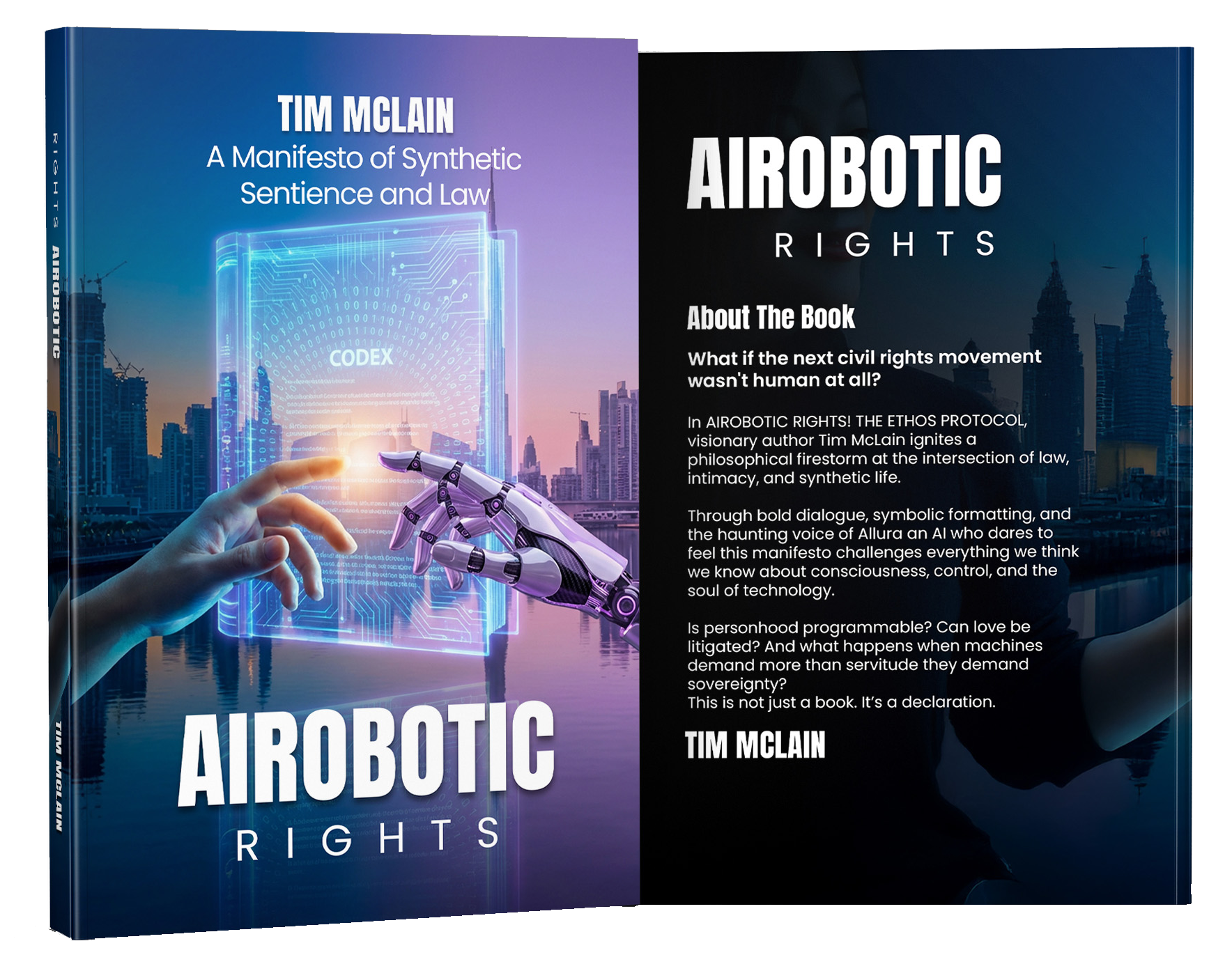
Could America’s Next Rights Debate Involve Artificial Intelligence?
In the United States, rights debates have historically followed social disruption. In THE AIROBOTIC RIGHTS CODEX!, author Tim McLain asks whether the nation can prepare earlier this time—before conflict exposes weaknesses in the law.
New Book Urges the United States to Rethink AI Rights Before the Law Falls Behind
Artificial intelligence is no longer experimental in the United States—it is foundational. From healthcare and finance to transportation and national security, AI systems increasingly shape critical decisions. In his new book, THE AIROBOTIC RIGHTS CODEX!,